

Last updated: November 19, 2026
Quick answer: in one freelance contract, an insurance requirement can often be narrowed by changing the clause, the limit, or the proof request before you sign.
Your freelance contract has an insurance requirement you may not be able to meet as written. You can often narrow the clause, change the wording, or push back on the scope before you sign. This guide on how to negotiate an insurance requirement in a freelance contract shows what to ask for, what to verify, and where the clause stops being workable.
This is information, not financial advice. A qualified adviser should be consulted for your own situation, and a licensed broker or attorney may be able to help with the contract language. See the U.S. Small Business Administration’s guidance on business insurance and the IRMI glossary for policy and endorsement terms.
Key takeaways
- Start with the exact clause, not a vague memory of it.
- Push on scope, limits, timing, and proof before you argue over price.
- Ask what risk the client is trying to cover; that usually reveals where the clause is too broad.
- A narrower clause can still protect the client without forcing you into a policy you do not need.
- If the contract asks for wording you cannot get from your insurer, the problem is usually the contract, not your paperwork.
Who this applies to, and what you need first

This applies if you’re a freelancer, contractor, or solo consultant facing an insurance requirement in a client contract before you sign. It assumes you already have the draft contract, the clause that names the insurance requirement, and a basic sense of what work you’ll do on the project. If the work involves licensed construction, medical services, regulated advice, or anything with a formal statutory insurance rule, stop and get qualified help before you rewrite the clause yourself.
Because this is a clause issue, the first step is to read the wording as written, not as you hope it means. Picture this: you’ve got a contract in your inbox, and one paragraph asks for insurance you may not carry today. The answer is to negotiate the scope-based risk of the clause, not just the wording, and to do it before signatures and start dates. Here’s what the steps below settle.
- Isolate the clause and mark every demand in it. Copy the exact words into a note and split them into pieces: required policy type, policy limits, endorsements, certificate requirements, notice periods, and any “additional insured” language. Verify whether the clause asks for one policy or several. If you can’t point to each demand in writing, the conversation will drift fast.
- Identify the work that creates the risk. List the actual services, deliverables, locations, and client assets involved. Verify whether the clause matches that risk. If a clause asks for general liability when you only write copy from home, or asks for professional liability that covers advisory work you don’t do, the clause may be broader than the job.
- Ask what the client is trying to protect. Send one clear question: which loss, claim, or vendor rule is this clause meant to cover? Verify whether the answer is about property damage, third-party injury, data exposure, or professional error. If the answer is vague, the clause may have been copied from another vendor form.
- Check your current policy before you promise anything. Pull the declarations page and any endorsements, then compare them with the clause line by line. Verify whether your policy already covers the required activity and whether the named limits match. If the contract assumes coverage you do not have, don’t guess.
- Propose narrower wording tied to the job. Ask to limit the requirement to the services in the statement of work, the project term, and the actual premises you enter, if any. Verify whether the client will accept wording that says “to the extent applicable” or “for claims arising from contractor’s performance.” If they insist on blanket coverage for unrelated work, that’s a problem.
- Push back on certificate and endorsement demands that go beyond proof. A certificate of insurance shows coverage at a point in time; it is not the policy itself. Verify whether the client wants a standard certificate or something more. If they demand wording your insurer won’t issue, you may need a contract revision instead of a better form.
- Confirm the limit changes in writing before you accept them. If the client wants higher limits, ask whether that change applies to this project only or to every future job. Verify the exact amount, the policy period, and whether the change is temporary or permanent. If the clause leaves the amount open-ended, that is not a workable term.
- Get the revised clause back in the contract, not in email alone. Verify that the final draft reflects the agreed limits, endorsements, and certificate language before signing. If the contract still contains the old clause, you do not have a deal on the clause yet.
A lot of the leverage is in the wording, not in a dramatic refusal. Many clients will accept a narrower clause once you show them the specific risk.
What a fair insurance requirement usually says
A fair insurance requirement is tied to the work, the project term, and a real risk the client can name. It usually does not ask for coverage that has nothing to do with the services, or for policy terms that go beyond standard proof. That difference matters more than any single number.
Because the clause should match the work, a broad form can still be too much for a freelancer. A clause that asks for blanket coverage for all acts, all locations, and all dates can turn into a dead end when your work is limited to one project and one client file.
- Matched to the job: If you only review text, the clause should focus on that service, not on construction-site injury or inventory loss.
- Tied to time and place: If you never enter the client’s office, on-site liability language may not fit.
- Proof-focused: A request for an insurance certificate is one thing; a request for special wording not in your policy is another.
- Specific, not open-ended: If the clause names a policy type and a limit, you can assess it. If it says “adequate insurance,” you can’t.
The rule of thumb is simple: the clause should track the actual client contract risk, not the largest vendor form the client has ever used. For background on how client-facing insurance requirements fit into freelancer work, the hub on freelancer insurance for client contracts and vendor requirements covers the wider setup. See also the IRMI explanation of certificates of insurance and the SBA overview of business coverage.
How to negotiate the insurance requirement, step by step
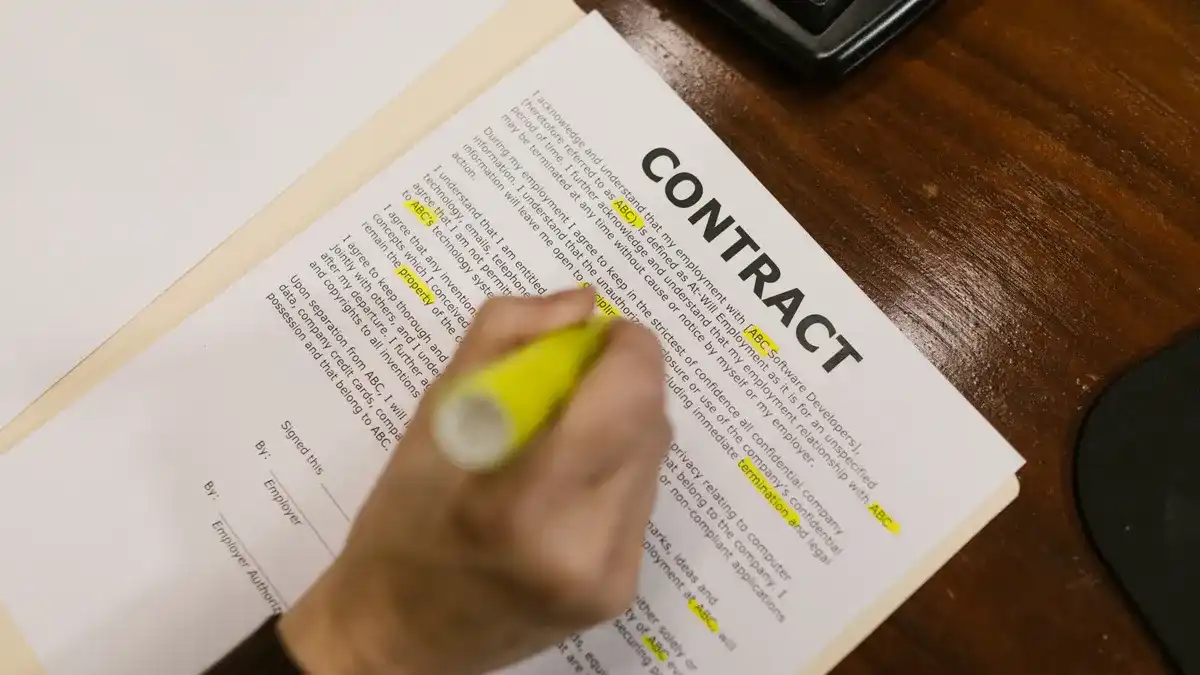
Now that the clause is defined, the next step is to answer it in a way the client can accept. Picture this: you’re about to email the project manager, and you need language that sounds firm without sounding combative. The right move is to ask for revisions in a sequence that makes it easy to say yes. Keep your asks narrow, and tie each one to the project.
- Start with the mismatch. Say which line doesn’t fit the work and why. Use one sentence. Verify that you are objecting to the clause, not the whole deal. If you write a long explanation, the client may ignore the actual ask.
- Offer a replacement phrase. Suggest language that limits the obligation to the services in the statement of work. Verify that your replacement still gives the client protection for the project at hand. If your draft removes all protection, it will stall.
- Separate policy type from policy limit. Ask whether the client needs general liability, professional liability, or another type, then ask for the lowest limit that fits the risk. Verify that the clause does not mix the two into one vague demand. If the client says “just match our standard,” ask for that standard in writing.
- Narrow any endorsement request. An endorsement is a policy change or add-on that alters the coverage terms. Verify whether the client needs a specific endorsement or just a certificate showing current coverage. If they want language that your carrier does not normally provide, the clause may need rewriting.
- Question broad additional insured wording. If the contract asks that every client entity be added, ask which entity actually needs it and for what claim type. Verify whether the request is tied to your work or to the client’s own risk-sharing setup. If the clause is global and not project-specific, push back.
- Set the certificate process. Ask what form they want, who receives it, and when it’s due. Verify whether the client wants a certificate before start date, at renewal, or after a milestone. If the timing is impossible, the issue may be administrative rather than substantive.
- Confirm any limit increase before you accept it. If the client wants higher limits, ask for the exact amount and whether the increase applies for the full project term. Verify the change against your policy term, not just the contract date. If the amount is too high for the job, say so plainly and ask for a lower project-specific figure.
- Get the final wording into the draft. Verify that the revised clause replaces the old one in tracked changes or a clean draft. If the revised language only lives in email, the old clause can come back at signature time.
The result is usually better when the request is specific and narrow. You’re not arguing against insurance. You’re arguing for the right insurance clause for the actual job.
What if the required limit is too high?
When the limit is too high for the project, the clause should be discussed as a contract term, not treated as a personal failing. The practical fix is to tie the limit to the project’s scope, duration, and risk, then ask whether the client will accept a lower number for this engagement only. See the IRMI and SBA guidance if you need a reference point for what the policy is supposed to cover.
A lot of clients use one form for everyone, so the limit may be copied from a larger vendor file. That does not mean it fits your work. If your contract is for a 2-week design assignment or a one-off consulting review, an inflated limit can be out of proportion to the job.
- Ask whether the limit can be project-specific rather than blanket.
- Ask whether a lower limit with a narrower scope would satisfy the client’s risk team.
- Ask whether the clause can apply only to claims arising from your services.
- Ask whether the client will accept a renewal check instead of a larger limit.
If the client won’t move and the limit is beyond what your policy can support, the clause needs revision or the job needs a different structure. That is not a paperwork problem anymore. It is a contract mismatch.
When to stop and change the approach
Once the clause starts asking for things your insurer may not issue, or the client won’t explain why they want them, the fastest path is often a contract rewrite, not another round of back-and-forth. The more specific the mismatch, the faster you should stop improvising.
The clause names an open-ended limit: If the wording does not cap the amount or tie it to the project, you can’t measure the obligation — ask for a fixed limit or no clause until the amount is defined.
The client wants a certificate you can’t produce: If the request depends on a form or endorsement your carrier doesn’t offer, the problem is the requirement itself — ask for standard proof language instead.
The clause covers unrelated work: If it reaches beyond the services you’re actually providing, it shifts risk you did not agree to take — narrow it to the statement of work.
The client needs a blanket additional insured setup: If that wording would extend protection to entities outside the project, the request may be too broad — limit it to the named client entity that signs the deal.
The insurance term is the reason the deal exists: If the client says the project cannot start until you accept a clause that conflicts with your coverage, stop and decide whether the contract needs to be restructured — do not sign first and sort it out later.
On the flip side, if the client is asking for standard proof, a defined limit, and wording that fits the job, this is a normal negotiation. It just needs careful edits.
Common mistakes that make the clause worse
When you rush the reply, the draft can pick up new problems fast. Small wording mistakes can snowball into a clause that is harder to satisfy than the original.
- Accepting “standard insurance” without defining it. That can lead to a moving target. The fix is to ask for the exact policy type, limit, and proof format in writing.
- Treating a certificate as the policy. A certificate shows coverage status; it does not rewrite the policy. The fix is to check the declarations page and any endorsements before you agree, and to consult a licensed broker or attorney if the clause wording is unclear. See the IRMI certificate guidance.
- Agreeing to broad wording to keep the deal moving. That can expose you to obligations unrelated to the project. The fix is to keep the clause tied to the specific services and term.
- Ignoring the endorsement language. A clause may look fine until you see the endorsement requirement, which can be the hard part. The fix is to review both the clause and the insurance document the client wants.
- Using email as the final record. Emails get lost or contradicted by the next draft. The fix is to make the revised clause part of the signed contract.
- Waiting until after signing. Once the contract is signed, your bargaining position is much weaker. The fix is to negotiate before the signature line, not after the invoice.
No, this is not just admin. A sloppy clause can force you into coverage you do not carry or into a dispute about what you promised.
How to know the negotiation worked
After the redline comes back, check whether the clause now matches the work, the proof request, and the timing. A good result is specific enough that you can point to it in one paragraph.
Look for these signs: the policy type is named, the policy limits are fixed, the endorsement request is either removed or defined, and the certificate requirement is ordinary rather than special. The revised clause should refer to the actual services, not to every possible loss the client can imagine.
A solid outcome also has an end point. The clause should tell you when the obligation starts, when it ends, and whether it applies to the single project or future projects too. If those pieces are still fuzzy, the negotiation is not done.
FAQ
Can I push back on an insurance clause?
Yes. You can push back on the wording, the scope, the timing, and the proof request before you sign.
Drafted with AI; not yet reviewed by a person.
