

Last updated: November 22, 2026
Quick answer: disclose How to Disclose Freelance Work Done Through a Platform Marketplace in 1 clear sentence that names the platform, the service, and the payment route. Say who the client is in practice, how you got paid, and whether the platform owns the account or only connects you to customers.
This article is about How to Disclose Freelance Work Done Through a Platform Marketplace, and it explains how to describe platform-based self-employment in underwriting terms. This is information, not financial advice. A qualified adviser should be consulted for your own situation because underwriting rules, tax rules, and disclosure standards can differ by country and change over time.
Key takeaways
- Platform work usually needs to be described in plain terms: what you do, how often you do it, and who pays you.
- The underwriter cares about the real money flow, not the app’s marketing language.
- Client profiles and invoice records matter because they show whether the work is recurring, one-off, or tied to one marketplace.
- If the platform controls the account or sets the payment flow, that is relevant and should not be hidden.
- When the facts are mixed or unclear, it is usually safest to ask the underwriter how they want it described, and to check with a qualified professional if you are unsure.
Who should disclose platform marketplace work?

Platform marketplace work should be disclosed by anyone who earns freelance income through a platform such as a marketplace app, website, or booking system. That includes people who find jobs through a platform, bill through the platform, or receive payment through the platform even when the end client is someone else.
This applies if you are an independent contractor rather than an employee. It also applies if the platform gives you a client profile, because that profile is often part of the underwriting picture. A one-off task, a 3-month stream of jobs, and a long-running marketplace relationship can all look different to an underwriter, even if the income comes from the same app.
It is not for people trying to hide work because they think marketplace income “doesn’t count” as real freelance work. It does count when it affects earnings, activity level, or exposure. The underwriter may also ask how the platform terms work, whether the platform collects payment first, and whether the end client ever pays you directly.
If the application asks about self-employment, business activity, or clients, do not assume the platform name alone is enough. A person reading the file may need the full chain: platform, client profile, invoice records, and payment flow. That is the difference between a clean disclosure and one that looks incomplete.
How do I describe marketplace-based freelance work?
Describe marketplace-based freelance work by naming the platform role, the type of work, and the payment route in one plain sentence. For example, say that you do freelance design, writing, coding, or consulting through a platform marketplace that matches you with clients and processes payment.
The point is to make the work understandable in underwriting terms. “I do jobs through an app” leaves out the key facts. “I provide contract design work through a platform marketplace, using a client profile created on the platform, and I am paid through the platform after each completed job” gives the underwriter something usable.
A short comparison helps show what matters most:
| Work setup | What to name | What the underwriter is trying to learn |
|---|---|---|
| Direct freelance client | The client’s business name and the service | How stable the relationship is and whether invoices are direct |
| Platform marketplace work | The platform name, the service, and the client profile | Whether the platform is only a matchmaker or part of the payment chain |
| Hybrid setup | Both the platform and the end client if known | Whether income depends on one source or several |
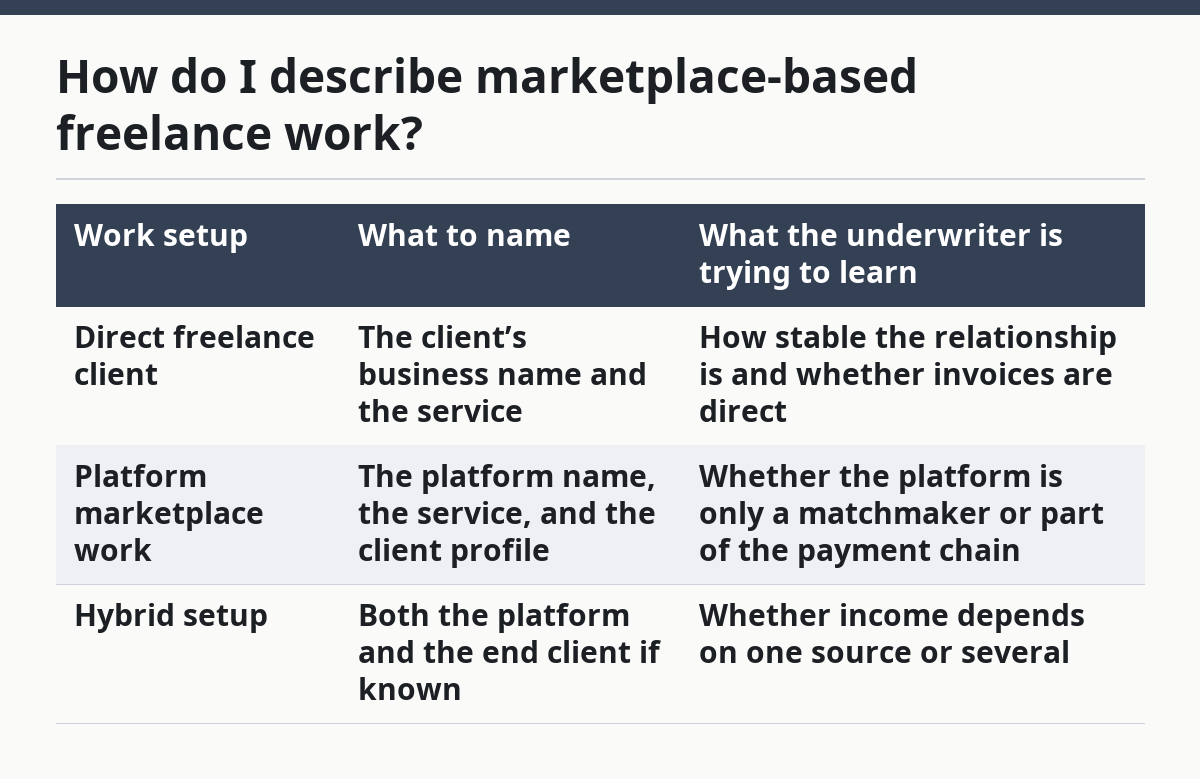
Do not over-explain the app’s branding. The underwriter is usually less interested in the marketplace’s logo than in the facts behind it: who the client is, who issues the invoice, and who sends the money. If the platform has terms that say it acts as an intermediary, that matters more than any sales pitch on the landing page.
For guidance on freelance insurance underwriting and eligibility, the hub page should sit beside this one.
What should I check before I submit the form?
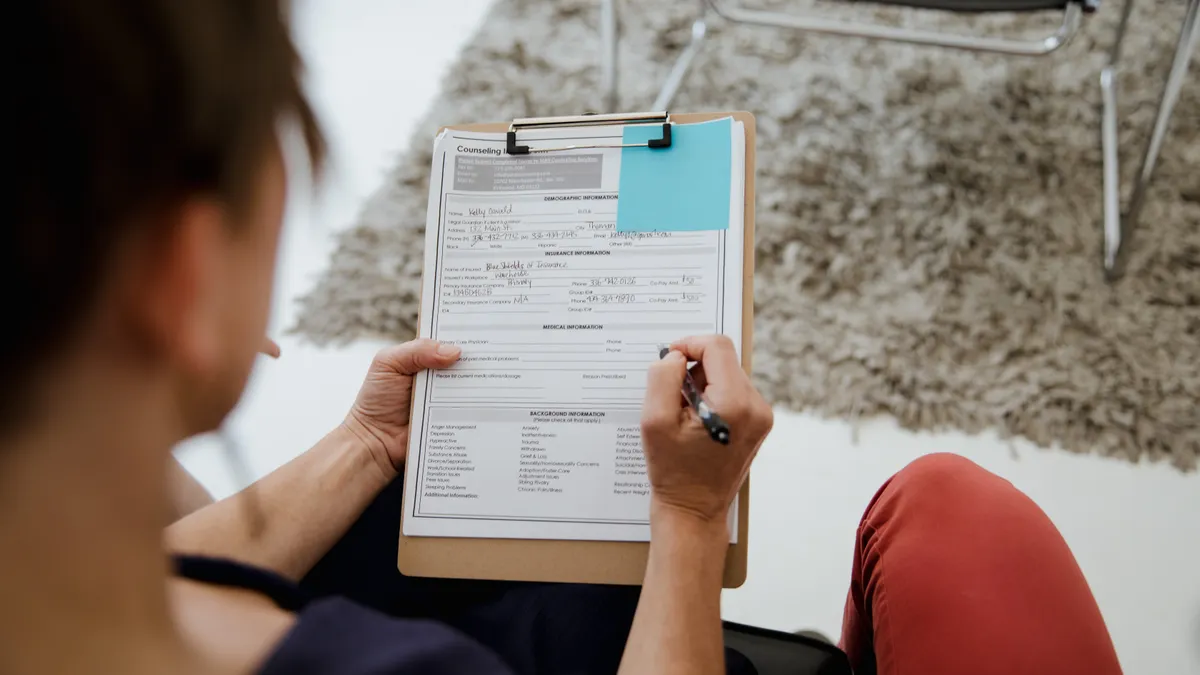
You should check the platform terms, your client profile, invoice records, and payment flow before you submit the form. Those four items usually tell you how the work should be described and whether the disclosure matches the records.
Start with the platform terms. Look for language about whether the platform is an intermediary, whether it owns the client relationship, and whether it controls billing. A 2-page summary is not enough if the full terms explain the payment chain differently.
Then check the client profile. If your profile shows a trade name, service category, rating, or marketplace badge, that can help the underwriter place the work in context. If the profile is generic or inactive, do not rely on it as proof of business structure.
Next, match the invoice records to the real job flow. If invoices go from you to the platform, or from the platform to the client, that is a material detail. If the invoices are missing but the platform shows a payout history, the record may still be usable, but it can trigger follow-up questions.
Finally, map the payment flow. Who collects the money first? Who deducts fees? Who pays out the rest? If the answer changes from job to job, say so. A mismatch between the form and the records can slow underwriting, even when the work itself is ordinary.
How do I disclose platform work step by step?
You should disclose platform work in a way that follows the paper trail, starting with the platform, then the service, then the client relationship, then the payment route. The steps below fit the kind of disclosure an underwriter can read without guessing.
- Write the platform name exactly as it appears in your account. Use the legal or trading name shown in the platform terms or dashboard. Verify that the spelling matches your records. A mismatch can look like a different business.
- State the type of freelance work you do. Use one short line such as writing, design, coding, consulting, or photography. Verify that the label matches what appears on the client profile. A vague label like “online work” hides too much.
- Say whether the platform introduces clients or only processes payment. Confirm if the marketplace matches you with clients, manages bookings, or both. If you skip this, the underwriter may misread the risk profile.
- Identify the end client when the form asks for it. Use the client name from the platform record if it is available. If the platform terms limit what you can name, follow the form instructions and note that the work comes through a marketplace. If the client is unnamed, that is a problem to flag, not to guess at.
- Describe the payment flow in one sentence. State whether the client pays the platform first, whether the platform collects a fee, and whether you receive a payout later. Verify the sequence against invoice records and payout statements. If the timing is unclear, the form may need clarification.
- Show that you are an independent contractor if that is the case. Use the status that matches the relationship, not the one that sounds easier. Verify that your invoices, profile, and tax records point in the same direction. If the platform treats you like an employee, do not describe the work as freelance without checking the facts and consulting a qualified professional; the IRS and HMRC guidance on worker status can help as a starting point.
- Note whether the account is yours or shared. Confirm who owns the platform account and who controls the login. If the account is in your name, say so. If someone else manages it, that can change how the underwriter reads the work.
- Keep the wording consistent across every form field. Use the same platform name, service description, and payment description everywhere. Check that the final draft matches the evidence. Inconsistency is a red flag, even when the underlying work is legitimate.
A good disclosure is usually short, specific, and traceable. A bad one is broad enough to sound impressive but weak enough to raise questions. If your records do not line up cleanly, that is the point where the form needs care, not guesswork.
When should I stop and ask for help?
You should stop and ask for help when the facts do not fit a simple marketplace description. A 10-minute review with a qualified adviser or the underwriter’s own guidance can prevent a form from being filed with the wrong structure.
The platform owns the client relationship: This means the marketplace, not you, sets key terms or controls the customer contact — ask how they want the work classified before you submit anything.
You are unsure whether you are self-employed or an employee: This affects how the work is described and can change the underwriting picture — pause and get a proper classification check.
Your invoices do not match your payout history: This means the paper trail is incomplete or inconsistent — do not force a neat answer; gather the missing records first.
The account belongs to a business partner or family member: This can make ownership and income attribution unclear — disclose the arrangement plainly instead of writing the account as if it were fully yours.
The platform terms forbid full disclosure of client names: This means the form may need a workaround or a note to the underwriter — do not invent a client name to fill the blank.
Your work is partly marketplace-based and partly direct-client based: This creates a mixed structure that is easy to misstate — separate the two streams rather than merging them into one line.
These are the points where a generic answer can do real damage. The right next step is usually clarification, not a better guess.
What mistakes do people make most often?
People usually make the same five mistakes, and each one can slow underwriting or cause a follow-up request. The fix is not more detail; it is better structure.
First, they name only the platform and leave out the service. That tells the underwriter where the work happens but not what the work is. The correct alternative is one sentence that names both the platform and the type of freelance service.
Second, they describe platform work as if it were a direct client relationship when the platform actually controls payment or booking. That can distort the file. The better alternative is to name the marketplace and then explain the actual payment flow.
Third, they use a profile bio instead of records. A client profile can help, but it is not enough on its own. The better alternative is to pair the profile with invoice records or payout statements.
Fourth, they mix up account ownership and income ownership. If the login is yours but the income is split, the file needs that distinction. The correct alternative is to state who owns the account and who earns the money from it.
Fifth, they copy the same line into every box without checking the form. Underwriting questions are not always identical, so the wording should match the question while the facts stay consistent. The better alternative is to keep the facts consistent while adjusting the wording to each field.
A short, accurate disclosure beats a polished but vague one. The underwriter is looking for a clean chain of facts, not a marketing summary.
What changes when the platform setup is unusual?
The standard approach changes when the marketplace structure is unusual, and the change should be stated plainly. That often happens when the platform handles more than matching buyers and sellers.
If the platform is also the billing party, say so. If it pays you after deducting fees, that is part of the payment flow. If it requires a client profile but the client never sees your legal name, note that the account identity may differ from the public profile.
If you work through several marketplaces, list them separately when the form allows it. Do not mash them into one bucket unless the question clearly asks for a combined total. Different platforms can imply different work patterns, and an underwriter may want to know whether the income is spread across multiple client sources.
If your records are electronic only, use the documents you have: dashboard exports, invoices, and payout screens. A lack of paper is not the same as a lack of evidence. What matters is whether the documents show the same 3 things: who the platform is, what service you provided, and how money moved.
If the platform classifies you as an independent contractor, use that label only if your broader records support it. The label alone does not settle the issue. The real test is whether your client profile, invoices, and payment flow all point to the same structure.
For anyone comparing marketplace work with other freelance setups, the key point is that underwriters care more about consistency than platform type. That is why a direct client, a platform client, and a platform processor can be different in practice.
How do I know the disclosure is good enough?
A disclosure is good enough when a stranger can read it and map the work without guessing. If the underwriter can see the platform, the service, the client relationship, and the payment path, the disclosure is usually on the right track.
A good result often has three traits. It uses the same name for the platform in every place. It matches the client profile and invoice records. And it does not try to turn marketplace work into something it is not.
If a form asks for more detail than you can give, answer with the facts you do have and flag the gap. Do not fill missing space with assumptions. A short note that says the work is done through a platform marketplace and paid through the platform is often better than a long, inaccurate paragraph.
For tax reporting and self-employment questions, local rules can differ, so check your country’s tax authority or a qualified adviser. For example, the IRS and HMRC each publish guidance on self-employment and worker status that can be a starting point, but neither set of rules should be treated as universal. See the IRS guidance on self-employed individuals and HMRC’s guidance on working for yourself.
Should I name the platform or the end client?
Name both if the form allows it and if the platform terms do not restrict disclosure. The platform tells the underwriter how the work is arranged, while the end client shows who actually received the service. If you can only name one, use the one that the question asks for and explain the marketplace setup in the next line.
Does platform work count as direct client work?
Platform work can be different from direct client work, even when you do the task yourself. The difference is in the structure: a marketplace can introduce the client, handle payment, or set account rules. That makes the disclosure different from a simple direct-invoice relationship.
How do I describe marketplace-based revenue?
Describe it as revenue earned from freelance services completed through a platform marketplace, then add the service type and payment flow. Keep the wording plain and repeatable across forms. If the platform collects the client payment first, say that, because the money path is often what matters most to an underwriter.
Drafted with AI; not yet reviewed by a person.
