

Last updated: November 19, 2026
Key Takeaways
- Freelancers do not automatically need an EIN just for self-employment income.
- An EIN is the IRS business tax ID used on federal forms.
- Sole proprietors often skip an EIN unless tax or banking rules require one.
- An EIN can simplify paperwork when a business starts operating like one.
An Employer Identification Number, or EIN, is usually optional for a freelancer, but it becomes useful — and sometimes necessary — when tax forms, business banking, or client paperwork are involved. For many sole proprietors, the IRS still treats the business as the individual, so the freelancer can often use a Social Security number, but a qualified tax adviser should be consulted for your own situation and the IRS guidance should be checked for the specific filing. If the freelancer is a sole proprietor with no employees, the Social Security number often works; if the freelancer has a single-member LLC, payroll, excise tax filings, or certain banking setups, the EIN can make administration much cleaner. This is information, not financial advice, and a qualified tax adviser should be consulted for your own situation.
The short answer for freelancers
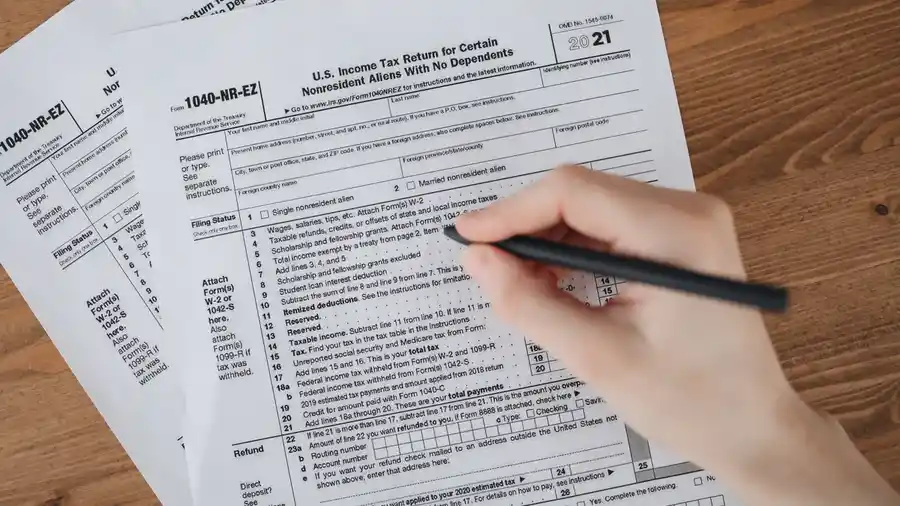
For most freelancers, an EIN is optional. A freelancer does not automatically need an EIN just because they earn self-employment income. For many sole proprietors, the IRS still treats the business as the individual, so the freelancer can operate under a Social Security number and use that number on a W-9 when a client asks for taxpayer information, but the IRS instructions and a tax professional should be consulted for the exact setup. That said, “can use an SSN” is not the same as “should never get an EIN.”
The real question is what the EIN does in practice. An EIN is a tax identification number issued by the IRS for business use. It can reduce the amount of personal information a freelancer shares on forms, help separate business paperwork from personal paperwork, and make vendor onboarding less awkward when a client’s accounts payable system expects a business tax ID, so the IRS W-9 instructions and a professional adviser are worth checking before deciding.
A generic article often gets this wrong by treating the EIN as mandatory for every self-employed person. It is not. A freelancer with no employees and no separate business entity may not need one at all, but the IRS rules can differ by entity and filing type, so the safe move is to confirm the facts with a tax professional. The point of the EIN is administrative identity, not a magic tax status. It does not change whether income is taxable, and it does not replace filing obligations.
The practical split is simple: if the freelancer is working as an individual and only needs to satisfy routine tax paperwork, an SSN is often enough. If the freelancer wants cleaner separation, expects a client to request a business identifier, or has an entity such as a single-member LLC, an EIN is often the cleaner tool. The IRS explains EIN use on its business tax identification pages, and the W-9 instructions remain the form most clients rely on for U.S. vendor onboarding.
What an EIN actually does in freelancer paperwork
An EIN is a federal tax ID used to identify a business account with the IRS. It is not a license, not a permit, and not proof that a freelancer has formed an LLC. For a freelancer, the number mainly shows up in three places: tax forms, banking, and client records.
On tax paperwork, the EIN can be entered where a payer wants a tax identification number. That often comes up on a W-9, the form clients use to collect the name, address, and taxpayer identification number they need for reporting. A sole proprietor can usually place an SSN or EIN there, depending on how the business is set up. A single-member LLC may use the owner’s number or the LLC’s EIN depending on federal tax treatment and how the account is registered; because the rules can vary, the bookkeeping detail matters more than the label on the invoice, and a tax professional should be consulted.
In business banking, an EIN helps separate a business deposit account from a personal one. Many banks ask for one when opening a business checking account, even if the freelancer has no employees. That request is administrative, not a signal that the IRS requires one for every freelancer. Each bank sets its own account-opening rules and may ask for formation documents, an operating agreement, or a DBA filing in addition to the EIN.
In vendor onboarding, the EIN can make a freelancer look more like a conventional supplier in the client’s system. Some procurement portals and accounts payable teams are built around business tax IDs, so a professional review can help if the onboarding form is unclear. If the freelancer submits an SSN instead, the system may accept it, or it may trigger a manual review. That does not mean the freelancer is doing anything wrong; it means the client’s workflow was designed for a broader range of vendors than a one-person business.
The cleanest way to think about it is this: the EIN is a paperwork tool. It can make forms and systems easier to complete, but it is not required simply to earn freelance income.
Do freelancers need an EIN if they are a sole proprietor or single-member LLC?

A sole proprietor usually does not need an EIN unless a specific tax or banking situation calls for one. A single-member LLC may also not need one for federal tax purposes if it is treated as a disregarded entity, but many single-member LLC owners still get an EIN because it simplifies forms and account setup, and a tax professional can confirm which treatment applies.
That distinction matters because the phrase “freelancer” covers more than one legal setup. A freelancer can operate as an individual, as a sole proprietorship under their own name or a DBA, or through a single-member LLC. The paperwork looks similar from the outside, but the tax identity behind it can differ.
If the freelancer is a sole proprietor with no employees, the IRS generally allows the owner’s Social Security number to serve as the taxpayer identification number on business forms. That means an EIN is often optional. The same broad idea applies to many single-member LLCs, though the LLC’s legal structure can change how banks, clients, and state agencies ask for information, so it is wise to consult a professional if the setup is changing.
The drawback of staying with only an SSN is privacy and friction. Privacy because the number appears on more forms than many freelancers want; friction because some clients, payment platforms, and banks are built to expect an EIN. The drawback of getting an EIN is administrative clutter: one more number to track, one more IRS account to keep consistent, and one more detail to match across records. None of those costs are severe, but they are real.
If the freelancer has employees, the answer changes. Payroll creates tax obligations that typically require an EIN. The same is true if the business files certain federal excise tax returns. Those are not common freelancer situations, which is why many one-person businesses never need an EIN unless their operations change.
For a reader comparing this with broader self-employment planning, the hub on freelancer insurance coverage basics can sit next to this topic without overlap: tax IDs, banking, and insurance are separate questions, even if they often appear in the same onboarding packet.
When an EIN becomes useful in real life
An EIN becomes useful when the paperwork around the business starts behaving like a business, not a hobby. That usually happens in five places: client onboarding, invoice management, banking, payroll, and entity separation.
First, some clients ask for a W-9 with a business tax ID instead of an SSN. They may do this because their vendor system is built for companies, not individuals. If the freelancer expects repeated work from agencies, law firms, hospitals, publishers, or procurement-heavy organizations, an EIN can reduce back-and-forth, and a tax adviser can help if the form instructions are unclear.
Second, an EIN can help when a freelancer invoices under a business name rather than a personal name. If the invoice, banking record, and tax form all point to the same identifier, month-end reconciliation is simpler. That does not change the tax owed, but it can make records easier to match at year-end.
Third, a business bank account may require an EIN, even if the bank would technically accept other documents. Banks vary. Some will open an account for a sole proprietor with an SSN and a DBA filing; others ask for an EIN as standard procedure. If the freelancer wants a clean separation between personal and business deposits, the EIN is often part of that setup.
Fourth, an EIN is useful when the freelancer is asked to fill out forms that assume an employer-employee structure. Some payroll portals, 1099 collection systems, and compliance questionnaires are simply easier to satisfy with an EIN than with a personal SSN. That is an administrative convenience, not a tax advantage.
Fifth, a single-member LLC often uses an EIN to make the LLC feel like its own operating unit, even if federal tax treatment remains simple. This is one of the few places where the legal label matters more than the day-to-day work. The LLC is a separate entity under state law; the EIN helps third parties treat it that way.
The trade-off is straightforward: more separation, more paperwork. Less separation, less administration. The right balance depends on how much client-facing and banking friction the freelancer is willing to tolerate.
How to decide step by step
A freelancer can decide whether an EIN is worth getting by checking seven specific points in order.
- Identify the legal setup: Confirm whether the work is being done as an individual, a sole proprietorship, or a single-member LLC. Verify the name that appears on invoices and tax forms. If the setup is unclear, the problem is structural, not just administrative.
- Check whether employees exist: Determine whether anyone is on payroll now or will be soon. Verify whether wages, withholding, or payroll filings are involved. If yes, the EIN requirement usually changes, and an SSN-only approach stops being enough.
- Review client onboarding forms: Look at the last 1 to 3 W-9 requests, vendor portals, or contract packets. Verify whether the client accepts a Social Security number or specifically wants an EIN. If the system rejects the SSN field, the issue is not tax law; it is the client’s process.
- Check banking needs: Ask the bank or credit union what it requires for a business checking account or merchant setup. Verify whether it asks for an EIN, a DBA filing, or entity documents. If the bank requires extra documents, do not assume the EIN alone will solve the account-opening issue.
- Match the number to the tax form: Decide whether the form should carry the owner’s SSN or the business EIN. Verify that the legal name, business name, and tax ID are consistent. Mismatches are a red flag for rejected forms or delayed payments.
- Consider privacy exposure: Count how many people or systems will see the number over a year. Verify whether the extra privacy from using an EIN is worth the added recordkeeping. If the freelancer only has a few trusted clients, the privacy gain may be modest.
- Check whether the work has outgrown a one-person setup: Look for recurring contractors, payroll services, excise-tax questions, or separate accounting. Verify whether the business has become more than a simple side practice. If the answer is yes, the EIN is often part of the next stage of administration.
A good result here is not “everyone gets an EIN.” A good result is a clean match between legal structure, tax paperwork, and client systems. If the freelancer can complete a W-9, open the right bank account, and keep records straight without one, an EIN may be optional. If any of those steps keep stalling, the EIN is usually worth considering as a paperwork fix.
What freelancers get wrong about EINs
The most common mistake is assuming an EIN changes the tax bill. It does not. An EIN identifies the business to the IRS; it does not create a new rate, a special freelancer category, or a shortcut around self-employment income rules. The correct alternative is to treat the EIN as an identifier, not a strategy.
A second mistake is using the wrong tax ID on a W-9. If the name on the form does not match the number type being reported, the payer may flag it. The consequence is usually a delayed setup or a backup-withholding question later. The better move is to match the form to the actual legal setup before sending it back.
A third mistake is thinking every single-member LLC must use an EIN in every context. That is too broad. Some banks, clients, or tax situations may want it; some may not. The consequence of overgeneralizing is unnecessary paperwork or confusion over which number should be used where. The correct alternative is to check the form instructions and the account title, and to consult a professional when the classification is unclear.
A fourth mistake is waiting until a client demands the number on a deadline. That turns a simple administrative step into a rush job, and rushed forms are where mismatched names and account details happen. The better alternative is to sort out the number before vendor onboarding starts.
A fifth mistake is assuming the EIN solves business separation by itself. It does not create bookkeeping discipline, a separate bank account, or legal boundaries. Those are separate tasks. The EIN only helps make them easier to administer.
When the standard approach does not apply
The standard “SSN is enough” approach does not apply if the freelancer has employees, files certain federal excise tax returns, or is moving into a setup that requires tighter business separation. Those situations change the paperwork load, and the wrong identifier can slow down filings or account setup.
The freelancer hires an employee: payroll changes the tax picture — get the EIN before running wages through the business.
A client insists on an EIN for vendor setup: the client’s systems may not accept an SSN — use the EIN if the onboarding form requires it.
The bank asks for business tax identification documents: account opening may stall without them — gather the EIN and any formation or DBA paperwork the bank requests.
The freelancer has a single-member LLC but keeps mixing personal and business records: the problem is accounting discipline, not just identity — separate the accounts and keep the tax name consistent.
The business starts handling forms beyond ordinary freelance invoicing: payroll, excise-tax filings, or recurring subcontracting can change the setup — review the structure with a qualified adviser.
A simple rule helps here: if the paperwork is starting to look like a company’s paperwork, the EIN is probably no longer optional in practice, even if it was optional at the beginning.
The most useful way to think about an EIN
An EIN is useful when it removes friction, not when it sounds more official. For many freelancers, that means it stays optional until a client, bank, or tax form makes the SSN inconvenient. For others — especially those using a single-member LLC, hiring help, or building a vendor-friendly business profile — it becomes part of normal operations.
The honest answer is not “yes” or “no” in every case. It is “not always, but often enough to be worth understanding.” The safest move is to match the number to the real setup, not to the marketing language around freelancing. If the setup is simple, the EIN may be unnecessary. If the setup is becoming more formal, the EIN often saves time later.
For a freelancer who wants fewer surprises in onboarding and banking, that is usually the point where the question stops being theoretical and becomes practical.
Drafted with AI; not yet reviewed by a person.
