
Last updated: November 22, 2026
Quick Answer: for many freelancers, the right home-office coverage starts with a 5-part inventory and a replacement-cost total, then a policy limit that matches that number. Business personal property insurance is the part of business property coverage that protects the things in your freelance home office that your homeowners or renters policy may not fully cover. If you use a laptop, camera, desk, or office furniture for paid work, the right choice usually comes down to three things: what you own, where you keep it, and how much it would cost to replace. This topic is How to Choose Business Property Coverage for a Freelance Home Office.

Key takeaways
- Business personal property is about the stuff, not the income tied to it.
- A home office can include a laptop, camera, desk, printer, and office furniture, but the policy limit has to fit the real replacement cost.
- Deductibles matter because a low-value item can be easy to ignore after a small loss.
- Belongings kept in a rented workspace may need the same review as items at home.
- The wrong choice is often not “too little insurance” in theory, but the wrong limit for the equipment actually in use.
What does business personal property cover?

Business personal property covers the physical tools you use to run your freelance work. For a home office, that usually means items such as a laptop, a camera, a desk, a chair, a printer, storage drives, and office furniture.
The key idea is simple: if the item is part of the business setup and it sits in the office, it belongs on your coverage checklist. A basic homeowners or renters policy may protect personal belongings, but business gear often falls into a separate bucket with its own limit and rules. The U.S. Small Business Administration says business insurance should fit the property and risks tied to the work, so it can help to review those details with a professional or insurer.
That is why this coverage is not just a label. It is a limit on the tools that keep your work moving. A freelance writer with a laptop and desk has a very different property profile from a photographer who keeps a camera, lenses, lighting, and memory cards at home.
This page is only about the property piece. It does not decide whether you need scheduled coverage, how to build a full coverage stack, or how to store proof of insurance for travel and on-site work. Those are separate questions.
How do I list the things in my home office?
You choose the coverage you need by writing down every business item, then matching that list to a realistic replacement cost. Start with the items you use most often, then add the smaller pieces that are easy to forget.
A good home-office list usually has five parts:
- Main equipment: laptop, camera, printer, external monitor.
- Furniture: desk, chair, shelves, filing cabinet.
- Accessories: mouse, keyboard, mic, tripod, cables, drives.
- Storage items: cases, bins, backups, paper files.
- Items away from the office: gear kept in a rented workspace or another room.
The point is not to build a museum inventory. The point is to know what would cost real money to replace after a fire, theft, or other covered loss. If a laptop would be expensive to replace but a desk lamp would not change the picture much, you still note both. The laptop drives the choice; the lamp keeps the list honest.
Use this order if you want a clean decision process:
- Walk through the home office and name each business item you would need to keep working.
- Group the items by type, such as laptop, camera, desk, and office furniture, so nothing gets buried in a pile of “miscellaneous.”
- Estimate replacement cost at today’s price, not the price you paid years ago, because a policy limit should fit current costs.
- Separate personal items from business items so you do not count the same chair or monitor twice.
- Note where each item normally sits, since a rented workspace can change how you think about protection.
If your list fits on one page, you are doing it right. If it runs to three pages, the home office may hold more equipment than a standard blanket limit can comfortably cover.
How much coverage limit should I choose?
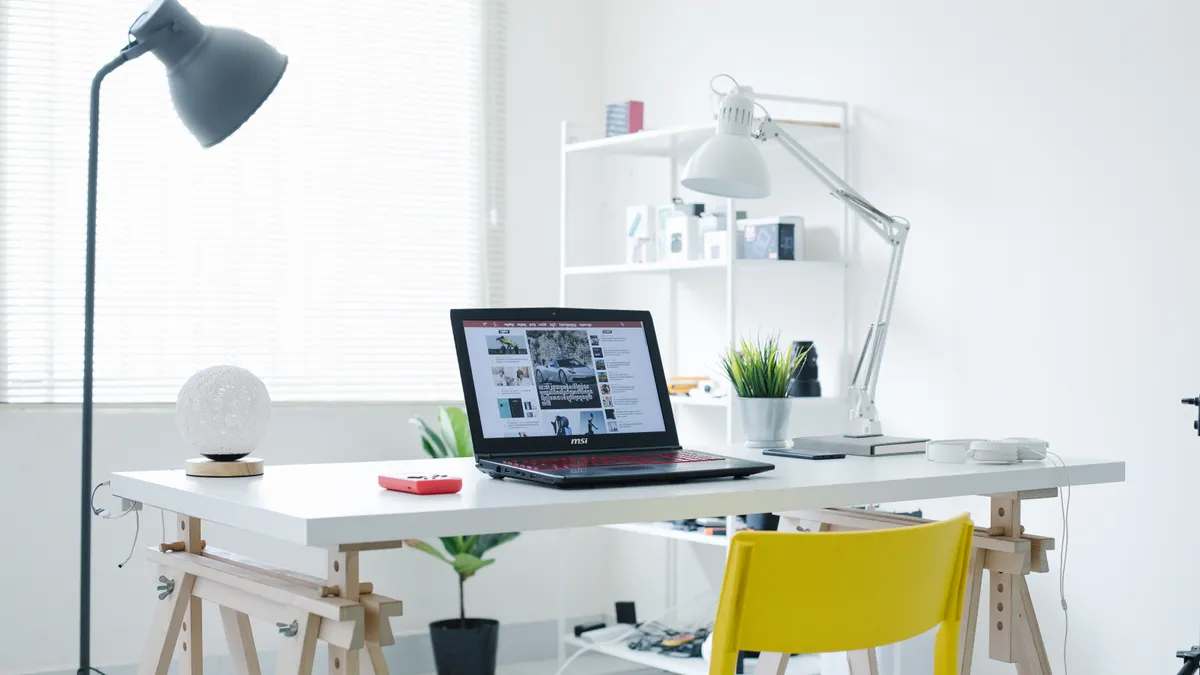
You should choose a limit that covers the full replacement cost of the business items you would want to buy again after a loss. The limit has to be high enough to replace the tools that keep the work going, but not so vague that you assume “some coverage” is enough.
A weak limit is one of the easiest mistakes to make. A freelance photographer may need a very different amount of protection than a solo consultant with one laptop and a desk. The same goes for a podcaster with a microphone setup versus a copywriter with only a laptop and chair.
A practical way to think about limits is this: if you had to replace the home office in a week, what would you actually spend? That number should reflect the laptop, camera, desk, and office furniture together, not just the item you notice first. If you rent a workspace part-time, fold those items into the same review instead of treating them like a separate problem, and consider checking the policy details with a licensed agent or insurer.
The common mistake is guessing low to keep the premium down. That can save money now and create a shortfall later. The better move is to set the limit from the real equipment list, then trim only when an item is clearly personal or low-value.
What should I watch with deductibles and limits?
Deductibles and limits shape what the policy really does when something breaks or disappears. A deductible is the amount you absorb first, and the limit is the ceiling on what the policy can pay for covered property.
If your home office has a laptop and a few accessories, a high deductible can make a small claim feel pointless. If it has a camera, desk, and office furniture with a larger replacement bill, the deductible matters less than the limit. The trade-off is plain: a lower deductible can make smaller losses easier to file, while a higher deductible may reduce what you pay for the policy but leaves more cost on your side after a loss.
This is the point where many freelancers get trapped by the words “covered” and “covered well.” A policy can cover business personal property and still be a poor fit if the deductible is too high for the value of the items. That is especially true for home office equipment, where one missing laptop or camera can be annoying but not large enough to justify a claim.
Compare the two choices this way:
| Choice | What it helps with | What it can cost you |
|---|---|---|
| Lower deductible | Smaller losses feel more manageable | You may pay more for the policy |
| Higher deductible | Better fit for larger, less frequent losses | Small claims can become not worth filing |
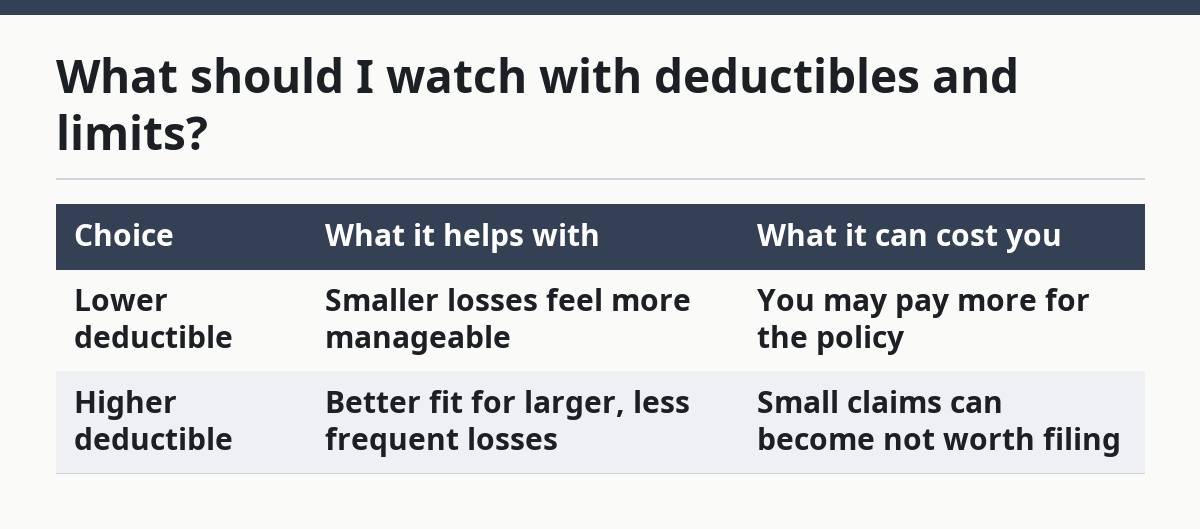
The right answer is not the lowest deductible. It is the deductible that fits the size of the gear you are protecting.
Does rented workspace gear need the same review?
Yes, gear kept in a rented workspace deserves the same review because the location changes the risk and the paperwork. A laptop or camera that spends time in a coworking space, studio, or rented office can still be business property, but it should not be assumed to fall under the same protection as the items at home.
The main issue is not the address itself. It is whether the policy sees that property as part of the home-office setup, part of a separate location, or something else altogether. That is why the room where the item sits matters as much as the item name. A desk in a rented workspace and a desk in your spare room are both desks, but the coverage story may not be the same.
This is also where a generic article often gets sloppy. It talks as if all freelance equipment lives in one place. In real work, items move between a home office and a rented space, and the policy should reflect that pattern.
If you split time between locations, list the gear by place before you choose a limit. That makes the home office part clear and stops the rented workspace from vanishing into a vague “miscellaneous business property” bucket.
What do people get wrong most often?
People most often get the limit, the item list, or the location wrong, and each mistake has a cost. A too-low limit can leave you short after a loss. A sloppy list can leave out the camera, desk, or office furniture that actually matters. A forgotten rented workspace can create a gap where you expected protection.
The fix is simple but not quick: match the policy to the actual setup. If your freelance work depends on one laptop, a monitor, and a desk, do not buy coverage as if you ran a full studio. If you also keep gear in a rented workspace, do not assume the home-office number tells the whole story.
The IRS Publication 587 can help you understand what counts as business use of a home, which is useful when you separate business property from personal property before you buy anything. That separation matters because the insurance question gets messy fast when personal and business items share the same room. For a freelancer, clean labels save time later.
Choosing based on the cheapest premium alone can also be a bad fit for anyone with more than a bare-bones setup. The better question is not “What is the lowest price?” It is “What would it take to replace the things that keep my work running?”
How do I make the final choice?
You make the final choice by comparing your equipment list to the policy limit, then checking whether the deductible and location rules still make sense. If the limit would replace your laptop, camera, desk, and office furniture without forcing you to absorb most of the loss, you are close to the right fit.
Use this short check before you buy or renew:
- Does the limit match the replacement cost of the items in the home office?
- Are the business items clearly separated from personal belongings?
- Would the deductible be reasonable for a claim tied to one or two items?
- Are rented workspace items included in the same review?
- Would the policy still make sense if one high-value item was damaged?
A good choice is usually boring. It covers the gear you actually use without making you pay for a limit so large that it no longer fits the size of your freelance setup. If the policy feels like a guess, the list is not detailed enough yet.
Then use that list to shop for business personal property insurance that matches the home office you really have, not the one you wish you had.
Is home office equipment covered under renters insurance?
Sometimes, but not always enough for business use. Home office equipment can be partly covered under renters insurance if the item is treated as personal property, yet business-use limits may be lower than you expect. Read the policy for business property language before you assume a laptop or camera is fully protected.
Do freelancers need a separate policy for office equipment?
Often yes, if the business items are valuable enough that a homeowners or renters policy does not fit them well. Business personal property insurance is built for work gear like a laptop, camera, desk, and office furniture. If the business tools would be expensive to replace, a separate policy can close the gap.
How much business property coverage do I need?
You need enough to replace the business items in your home office at today’s cost. Start with the laptop, camera, desk, and office furniture, then add the smaller equipment that you would actually buy again after a loss. The right limit is the one that matches that total, minus whatever deductible you can afford.
Drafted with AI; not yet reviewed by a person.
