
Last updated: November 23, 2026
Quick Answer: update 4 policy details right away after a partnership ends: the named insured, ownership, trading name, and effective date. How to Update Freelance Insurance After a Partnership Ends usually means sending the insurer the new facts in writing, then confirming the declarations page matches the solo business. This is information, not financial advice, and a qualified adviser or licensed insurance professional should check your own situation if the policy, tax setup, or liability history is unclear after the breakup. See the NAIC consumer guidance and IRMI’s insurance glossary for general policy terms.
Key takeaways
- The insurer needs the post-dissolution business facts, not the old partnership setup.
- The main change is usually the named insured, plus any ownership or trading-name details.
- Keep records that prove when the partnership ended and who now runs the solo operation.
- If the policy names the wrong party, a claim can become harder to sort out.
- Some policies can be updated by endorsement; others need a fresh policy period or a new application.
- A written update is safer than a phone call alone, especially if the change affects coverage dates or prior work.
Who this applies to
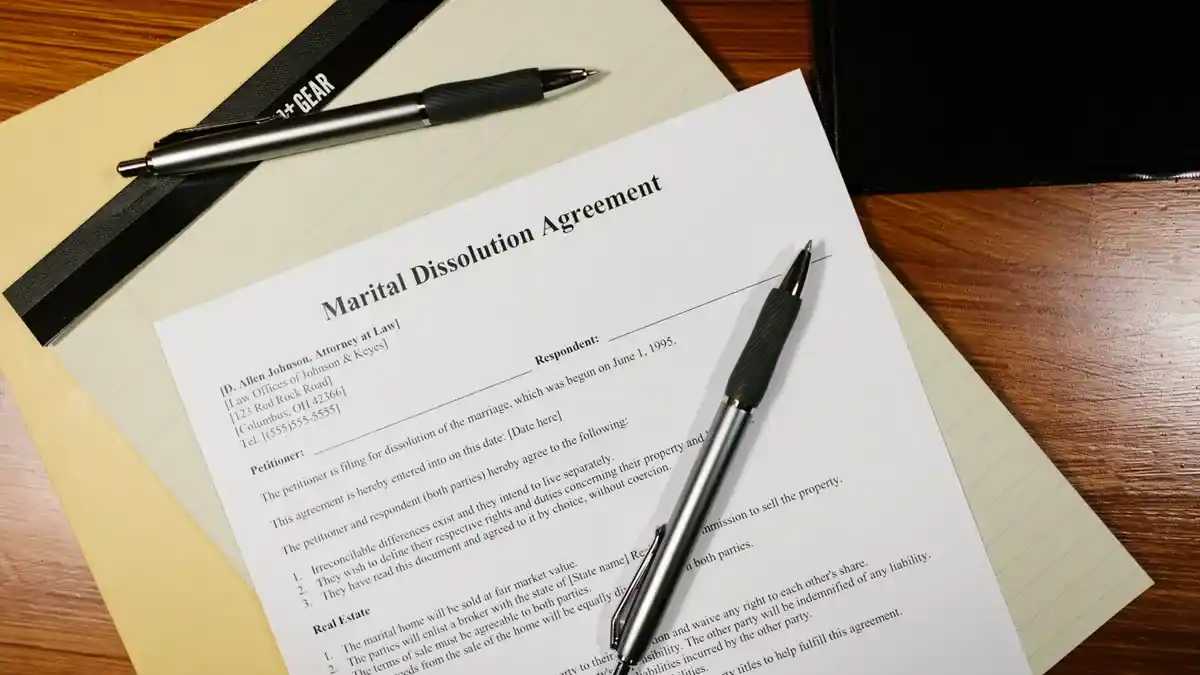
This applies to a freelancer who is coming out of a partnership dissolution and still needs business insurance for the solo operation that remains. It assumes there was an existing partnership, that the insurer knows at least some of the old business details, and that the policy may still list both partners, the partnership name, or shared ownership. If there are disputed debts, a lawsuit, or no clear agreement on who owns what, that is the point to bring in a qualified adviser rather than guess at the insurance wording.
The core issue is simple: insurance follows the insured entity and the facts on file. Once a partnership ends, the old policy may no longer describe the real business, even if the work, clients, and phone number stay the same. That mismatch matters because claims are reviewed against the application, the declarations page, and the policy wording, not just the day-to-day reality of the freelancer’s work. For a general overview of endorsements, see IRMI’s policy endorsement reference.
What changes on the policy?
The policy usually needs a named insured change, an ownership update, or both. The named insured is the person or business entity the insurer identifies as the policyholder, while ownership shows who actually controls the business and its assets. If the partnership owned the policy before, the insurer may need to reissue the declarations page or add an endorsement, which is a written change to the policy terms.
This is also where continuity records matter. The insurer may want proof of the dissolution date, the old partnership name, the new solo business name if one exists, and any revised business records that show the freelance operation is now run by one person. If those details do not line up, the insurer may delay the update while it asks for more paperwork.
A clean update also helps with shared liability questions. Partnership insurance often reflected joint work and joint control. A solo business after dissolution may still have exposure from past work, but the present policy should not pretend two owners are still operating together if they are not.
How do I update freelance insurance after dissolving a partnership?
You update it by giving the insurer the new business facts, asking for the policy change in writing, and checking that the declarations page matches the solo operation. That process usually takes a small set of documents and a careful review, not a guess.
- Review the current policy declarations page and policy wording for the named insured, business name, and ownership fields. Verify whether the policy still lists the partnership or both partners; a mismatch means the insurer may be covering the wrong entity.
- Collect the dissolution records, the updated business records, and any agreement showing who owns the freelance operation after the split. Verify the dissolution date and the new ownership status; if those facts are not settled, the policy update may be incomplete.
- Contact the insurer or broker and request a written policy update tied to the dissolution. Verify that the request covers the named insured, ownership, and trading name together; if the update only touches one field, the record may still be wrong.
- Submit the insurer’s change form, endorsement request, or new application if the carrier requires a replacement policy. Verify that the form matches the solo business exactly; a spelling error or old partnership name can cause a claims file problem later.
- Confirm how the insurer wants past work handled, especially if the old partnership did client work that could still generate a claim. Verify whether the policy terms mention prior acts, completed work, or a retroactive date; if not, ask how the carrier treats work done before dissolution. A licensed insurance professional can help interpret that wording, and the NAIC and IRMI explain related policy concepts.
- Check certificates, invoices, website wording, and bank records so the business identity is consistent. Verify that the public-facing name matches the insured name; if clients still see the old partnership name, the insurer may need that explained.
- Save the revised declarations page, endorsement, and any email from the insurer in one place. Verify that the effective date reflects the dissolution date or the date the insurer accepted the change; a gap between those dates can matter if a claim is reported.
- Review the updated policy against the solo operation’s actual work, revenue sources, and service list. Verify that the business is still doing the same type of freelance work; if the breakup changed the work itself, the insurer may need a further update.
What should I check before I send the request?
Check the entity name, the effective date, and the proof of dissolution before you send anything to the insurer. Those 3 items drive the rest of the update because they tell the carrier who now owns the policy and from when the change should apply.
The first check is the named insured. If the old partnership name is still on the declarations page, that is not a cosmetic issue; it means the policy may still be tied to the wrong business form. The second check is ownership. If one partner now runs the freelance business alone, the insurer should not be left guessing who controls the insured operation.
The third check is continuity records. Keep the dissolution agreement, email trail, revised bank details, and any updated registration documents together. If the insurer later asks why the policy changed, those records show the business did not just rename itself for convenience.
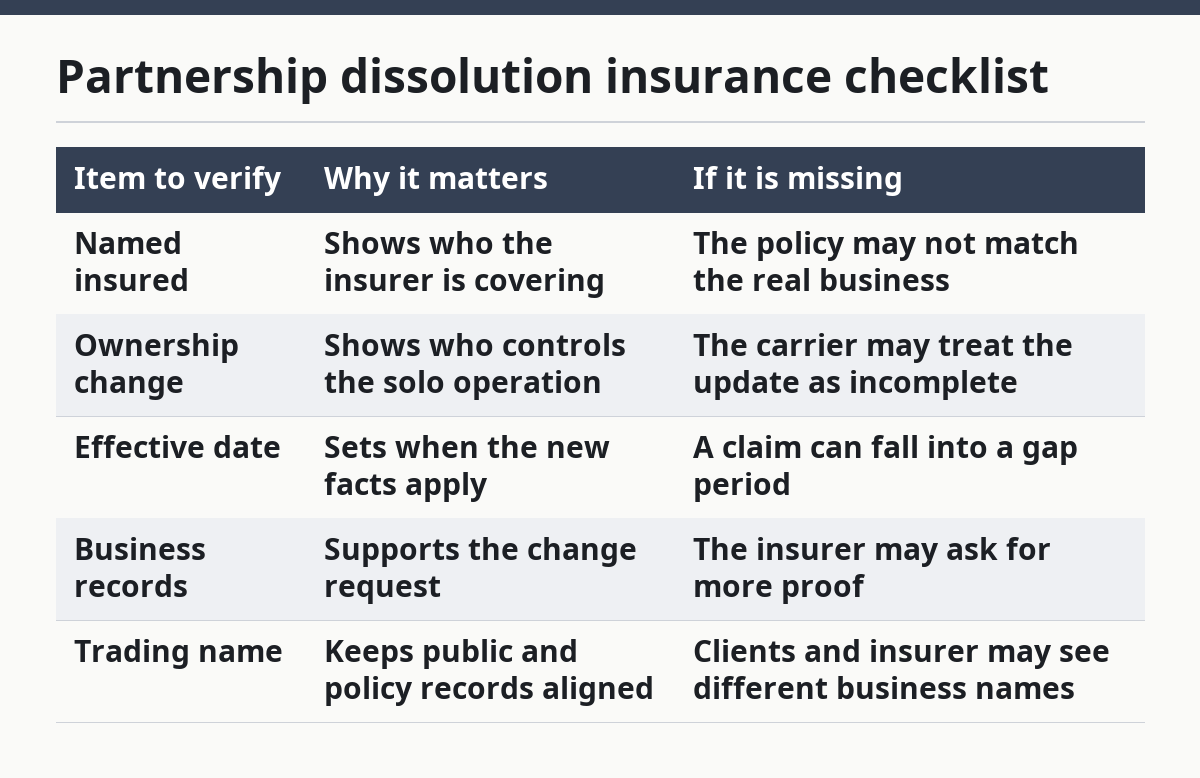
Partnership dissolution insurance checklist
| Item to verify | Why it matters | If it is missing |
|---|---|---|
| Named insured | Shows who the insurer is covering | The policy may not match the real business |
| Ownership change | Shows who controls the solo operation | The carrier may treat the update as incomplete |
| Effective date | Sets when the new facts apply | A claim can fall into a gap period |
| Business records | Supports the change request | The insurer may ask for more proof |
| Trading name | Keeps public and policy records aligned | Clients and insurer may see different business names |
What happens if the policy stays in the old name?
The policy can become harder to use if the old partnership name stays on it after dissolution. That does not always void coverage, but it can create a mismatch between the insured party and the business actually doing the work. In a claim, that mismatch can mean more questions, slower handling, and extra proof that the right entity intended to keep the coverage.
This is why the update should not stop at the label on the front page. If the partnership ended, the insurer may need the declarations page changed, the ownership record amended, and any schedule or certificate reissued. A 1-line email saying “please change the name” is often not enough when the insurer needs to know the legal and operational change behind it.
The same problem can show up in contracts. If client agreements, invoices, and the policy all use different business names, the file looks messy. The solo freelancer should bring those records back into alignment so the policy, the work, and the paperwork tell the same story. For related wording issues, see the guide to business insurance certificates and the page on policy endorsements.
When should I stop and get qualified help?
Get qualified help when the breakup changes more than the insurance form, because the policy update may depend on a legal or ownership question that is not settled yet.
There is a dispute over who owns the business: The insurer may not be able to decide which party should be named insured — stop the update and get the ownership issue resolved first.
The partnership dissolved, but old client work is still open: Claims may relate to work completed before the split — ask how the policy handles prior acts or earlier services.
The business kept using the partnership name after dissolution: The named insured and the public name may not match — update the records together or the insurer may ask for clarification.
There is no written dissolution record: Without continuity records, the insurer has less proof of when the change happened — gather the paperwork before asking for the policy change.
The solo operation changed services at the same time: A different service mix can change the risk profile — tell the insurer the business description has changed, not just the ownership.
The policy is tied to a contract that requires specific wording: Some clients want exact insurance wording on certificates — check the contract before requesting the update, so the revised policy still fits the job.
What mistakes do people make?
The most common mistake is treating the change as a simple name swap. A qualified insurance professional should review the change if the partnership dissolved, because the ownership record may need to change too. That can leave the ownership record wrong, which matters if the insurer later checks who actually carried the business after dissolution. See IRMI’s endorsement overview for the general policy mechanism.
A second mistake is failing to keep the old partnership records. Without the dissolution date, the insurer has less to work with, and that can slow the endorsement or replacement policy process by days or longer.
A third mistake is forgetting about shared liability. Past work done by the partnership may still create claims, so the solo policy update should be reviewed with that history in mind. Ignoring the old work does not make it disappear.
A fourth mistake is letting invoices, certificates, and the policy drift apart. If the paperwork says one thing and the insured entity says another, the file becomes harder to defend.
A fifth mistake is assuming every insurer handles the change the same way. Some will amend the existing policy; others may require a fresh application or new declarations page. The correct alternative is to ask for the insurer’s written process before you send the documents. NAIC consumer resources explain why written records matter when coverage changes.
How do I know the update is complete?
The update is complete when the declarations page, named insured, ownership details, and effective date all match the solo freelance business. You should also have written confirmation that the insurer accepted the change, not just a verbal promise from a phone call.
A good result is simple: one policy file, one business identity, and one clear record of when the partnership ended. If any of those pieces still point to the old partnership, the update is not done yet. For a deeper map of related change steps, see the hub on freelance business changes and policy updates.
FAQ
Does a partnership breakup require a new policy?
Not always. Some insurers can update the existing policy by endorsement, while others may need a new application if the named insured or ownership change is too large. The right answer depends on the policy wording and the insurer’s process, so ask for the decision in writing before the current term rolls forward.
Who stays on the policy after dissolution?
The policy should follow the business that is still operating and taking on the insured work. If one partner continues as a solo freelancer, that person may need to become the named insured, but the insurer decides based on the policy form and the proof of ownership change. If both parties still have exposure from past work, the old records also matter.
What records should I save for the insurer?
Save the dissolution agreement, the revised business records, the updated declarations page, and any email that confirms the effective date. Keep those 4 items together because they show who owns the business now and when the change happened. If a claim is reported later, those papers are the fastest way to show continuity.
Drafted with AI; not yet reviewed by a person.
